
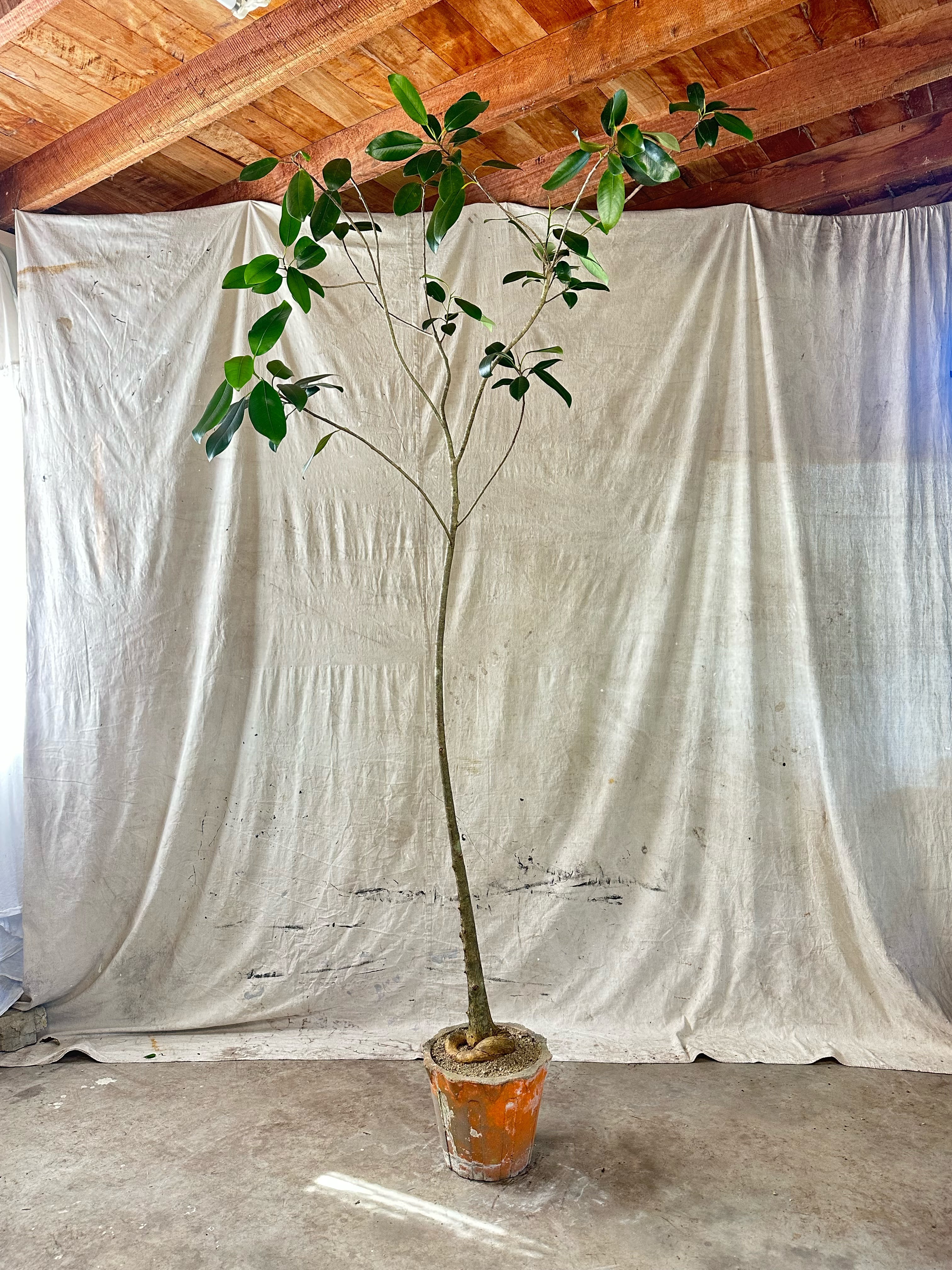
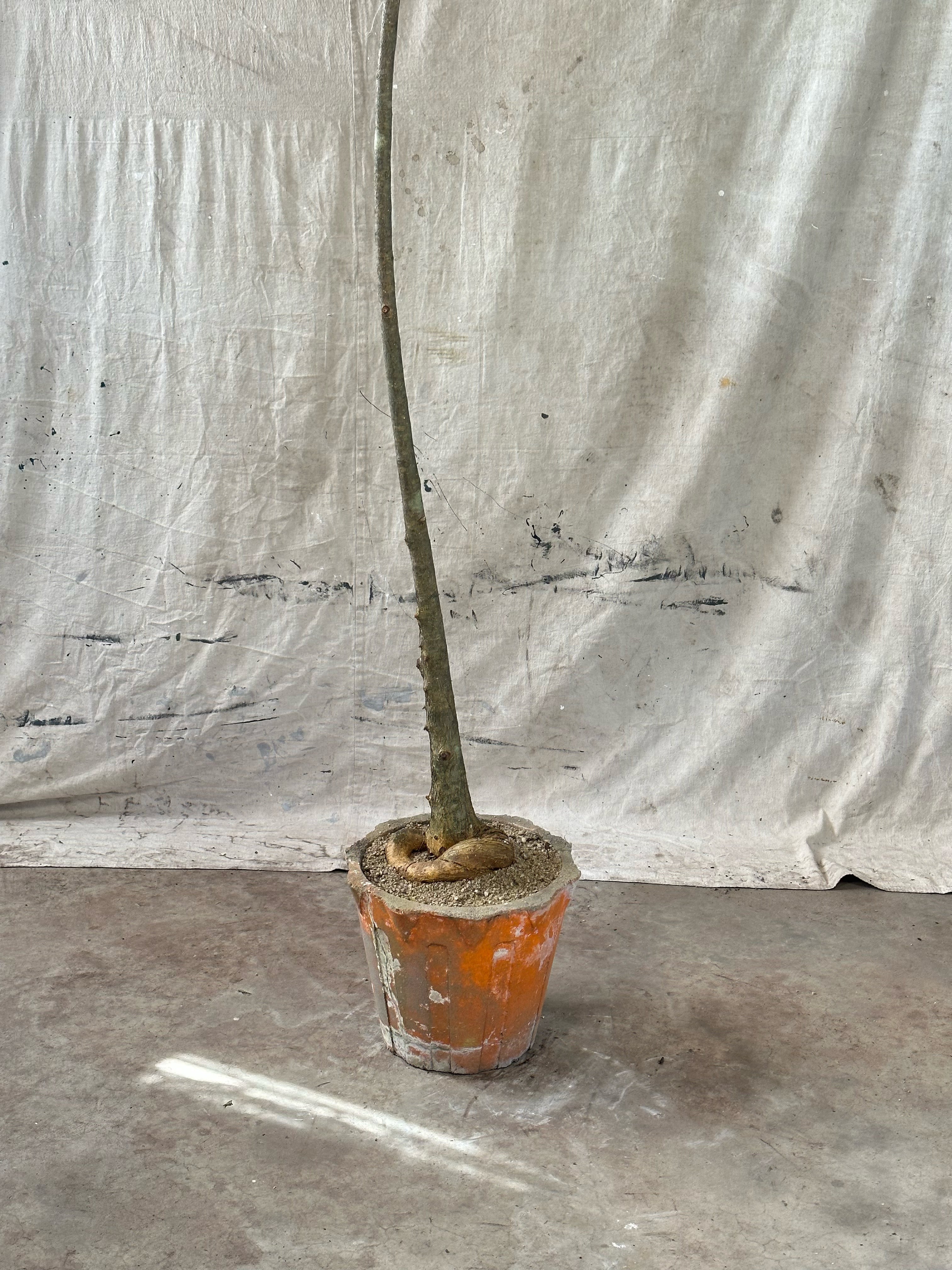
Port Jackson Fig (Ficus rubiginosa) / Mid-Century Tapered Cast Concrete Planter / Original Weathered orange Patina
PORT JACKSON FIG
Ficus rubiginosa
Specifications
-
Height: 2000mm
-
Concrete Planter: 250mm
-
Inclusions: Price includes delivery and professional installation.
ARCHITECTURAL FORM & HERITAGE
Native to the eastern coast of Australia—particularly the rocky hillsides and sandstone outcrops of New South Wales—the Port Jackson Fig (Ficus rubiginosa) is an iconic, highly resilient evergreen tree. In its wild habitat, it is a magnificent lithophyte, famous for wrapping its powerful, twisting roots around massive boulders and cliff faces. This curated interior specimen celebrates that rugged heritage by featuring a prominently exposed, structural root base (often cultivated in a bonsai style) that transitions into a slender, sweeping trunk. Topped with a sparse but striking canopy of leathery, deep green, ovate leaves (often with a soft, rusty-colored underside), it is a sophisticated, minimalist living sculpture perfect for contemporary spaces.
PLACEMENT & LIGHT
As a rock-dwelling native, this tree is incredibly tough and adaptable, but it relies on excellent lighting to maintain its architectural form.
-
Indoors: Position in a high-light space that receives abundant, bright indirect light or direct morning sun. Providing ample light is essential to keep the foliage dense and vibrant, and to prevent the trunk from stretching.
-
Outdoors: Thrives best in a sheltered courtyard, balcony, or patio in part shade to full sun. It is highly tolerant of coastal winds and urban conditions but should be protected from severe, freezing winter frosts.
SEASONAL CARE & WATERING
Cultivating Ficus rubiginosa is relatively straightforward. Because of its thick, water-storing root base and leathery leaves, it is exceptionally drought-tolerant and highly sensitive to being overwatered.
-
Indoors: Water thoroughly every 10–14 days from late spring to early autumn, allowing the top half of the soil profile to dry out completely before watering again. In winter, as its metabolism slows, reduce watering to a light drink every 3–4 weeks. Always empty drainage saucers within 30 minutes; its specialized root system will rapidly rot if left sitting in stagnant water.
-
Outdoors: Water regularly during the summer heat, ensuring the planter retains a light, even moisture while draining freely. Reduce watering significantly in winter, adjusting carefully for natural rainfall.
-
Note on Botanical Behaviour: While one of the most robust and forgiving Ficus species, it is still a fig. It may exhibit a minor stress response (yellowing and dropping a few older leaves) when transitioning to a new environment or if subjected to a sudden cold draft or prolonged low light. Once settled, it is incredibly stable.
NOURISHMENT & FERTILIZING
To sustain its glossy evergreen canopy and support steady growth, nourish the plant moderately during its active growing season. Apply a premium, controlled-release native fertilizer (low phosphorus) at the onset of spring and again in mid-summer. Cease all feeding during autumn and winter to allow the tree a period of natural rest.
DELIVERY & LOGISTICS
Please contact us prior to purchase if there are any major barriers to delivery at your property (including stairs, narrow corridors, or lift size constraints). These tall, top-heavy architectural pieces require specialist handling to ensure safe delivery and installation, which may incur increased delivery costs.
Choose options